

Masterpieces
Javier Mariscal enjoys looking at a Klee painting just as much as riding an escalator or driving his scooter along a coastal road. Sometimes he doesn’t distinguish between an appliance, a person, or a chair; everything has volume—these are images that think, laugh, and cry. Every image that appears in his mind’s eye, every everyday experience, is processed without prejudice in his visual memory and later emerges in his work. This section brings together more intimate works, created throughout his career for a curious audience that wants to explore and learn more about the artist.
Ceramics
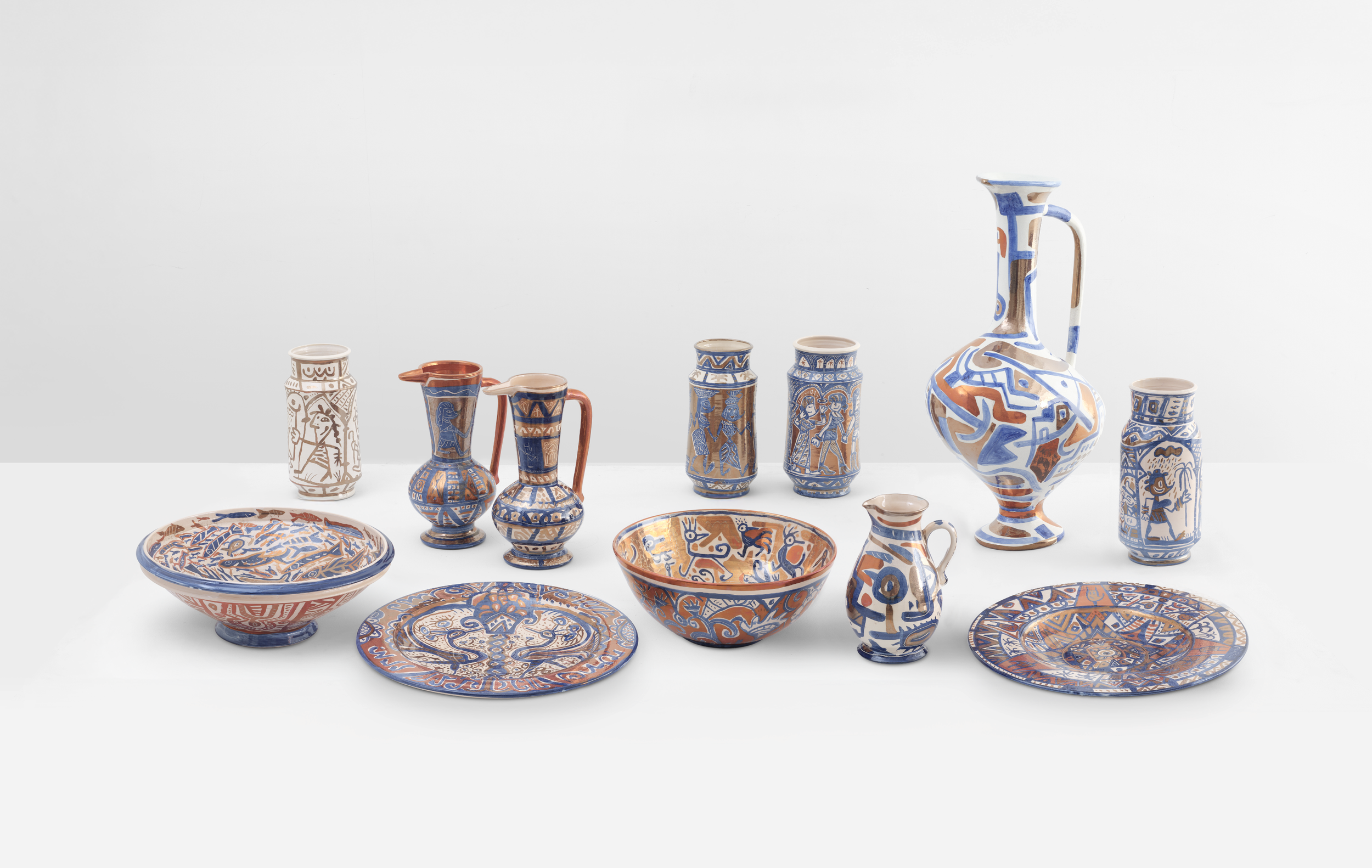
This selection of ceramics curated by La Mínima Gallery for cerARTmic highlights one of the most consistent yet least known strands of the artist’s career: his engagement with ceramics as a realm for artistic, narrative, and functional experimentation. Since his earliest forays into the craft in Manises, the artist has explored ceramics from multiple perspectives, combining artisanal research, the design of everyday objects, and contemporary graphic language. Among his early pieces, prototypes such as the Chrysler crown and pin—created in 1978 alongside Pep Molins and Eduardo Pastor—stand out, as do later utilitarian designs like the Amigos Telepáticos lamp and the Abstractos and Kandinsky tableware sets.
In recent years, he has returned to ceramics with an approach deeply rooted in artisanal processes and the revival of traditional techniques. This phase has yielded collaborations with ceramists such as Arturo Mora in Manises, the Avilés School of Ceramics, and Juan Manuel Romero in Cádiz, with whom he recently developed a series inspired by the black-figure techniques of classical Greece.
Mariscal draws on the ceramic pieces combining classical references with his visual imaginary. "It's like living in the Middle Ages but using contemporary graphic codes." He understands that cobalt blue, combined with golds and coppers, leads you to a baroque, serious, majestic feeling. And he breaks with that solemnity by using other, much more contemporary graphic codes.
-
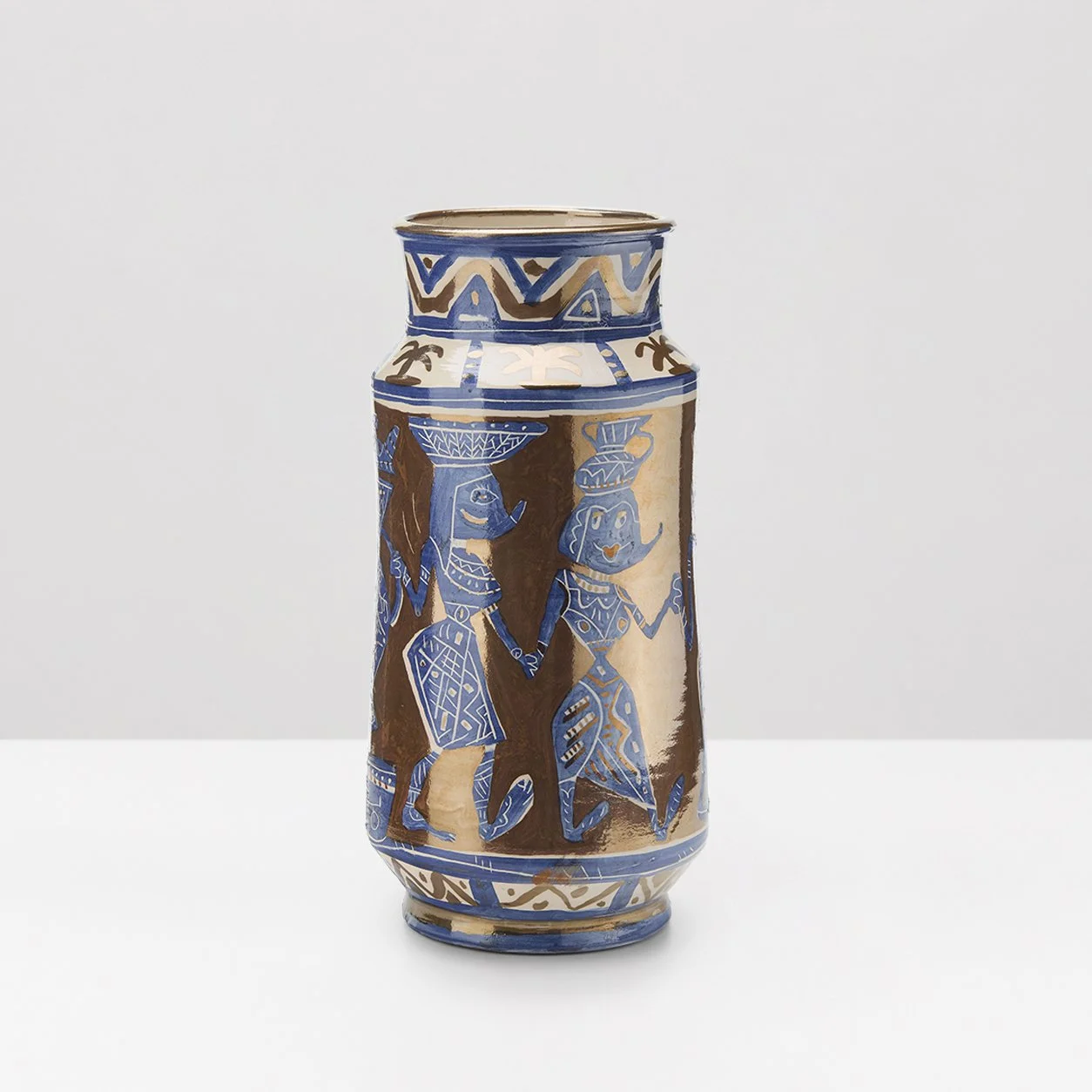
"Danza de Noche" Pharmacy Bottle
2025
Metallic finish
35 x 17 x 17 cm -
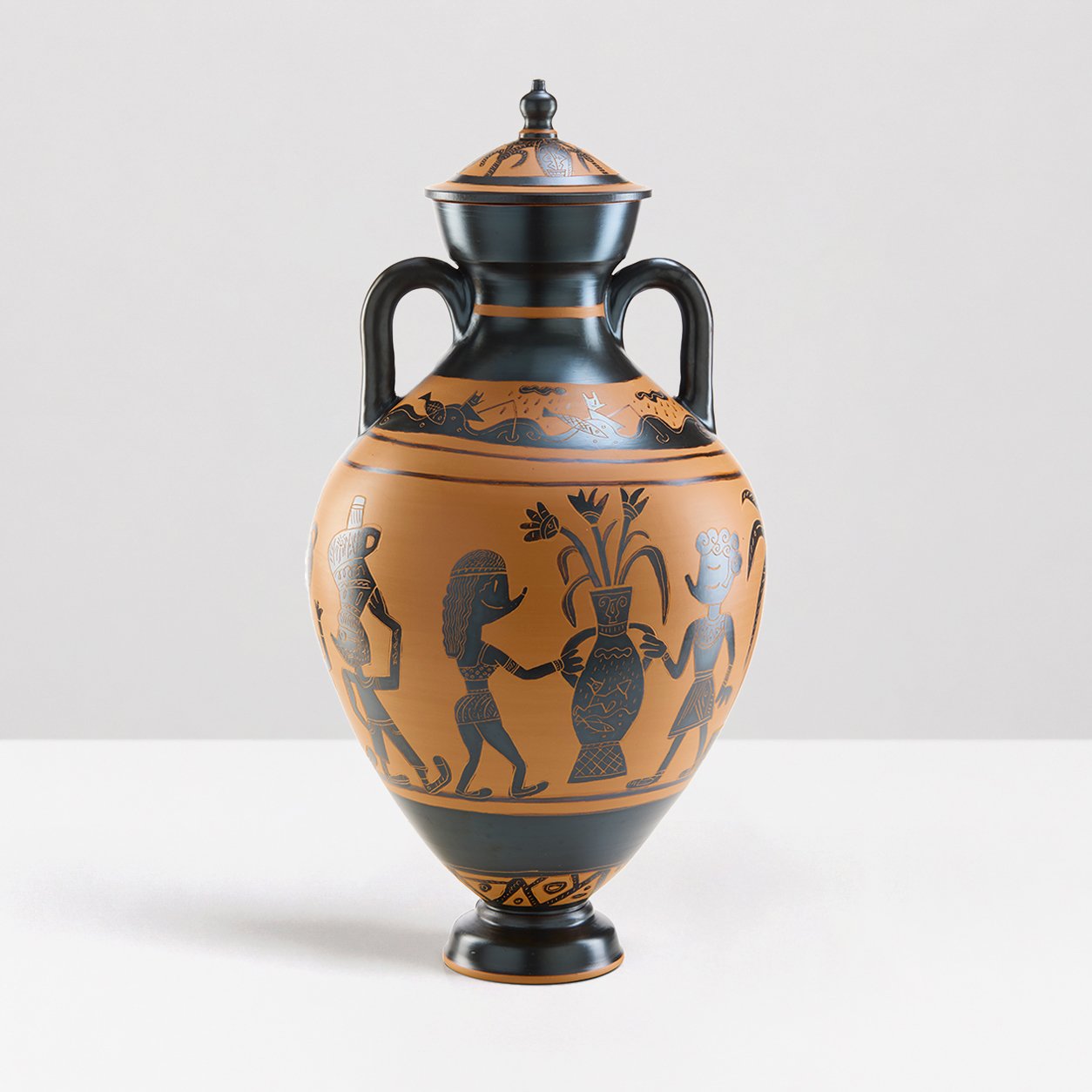
Water: The Source of Life
2026
Greek black-figure pottery
66 x 36 x 36 cm -
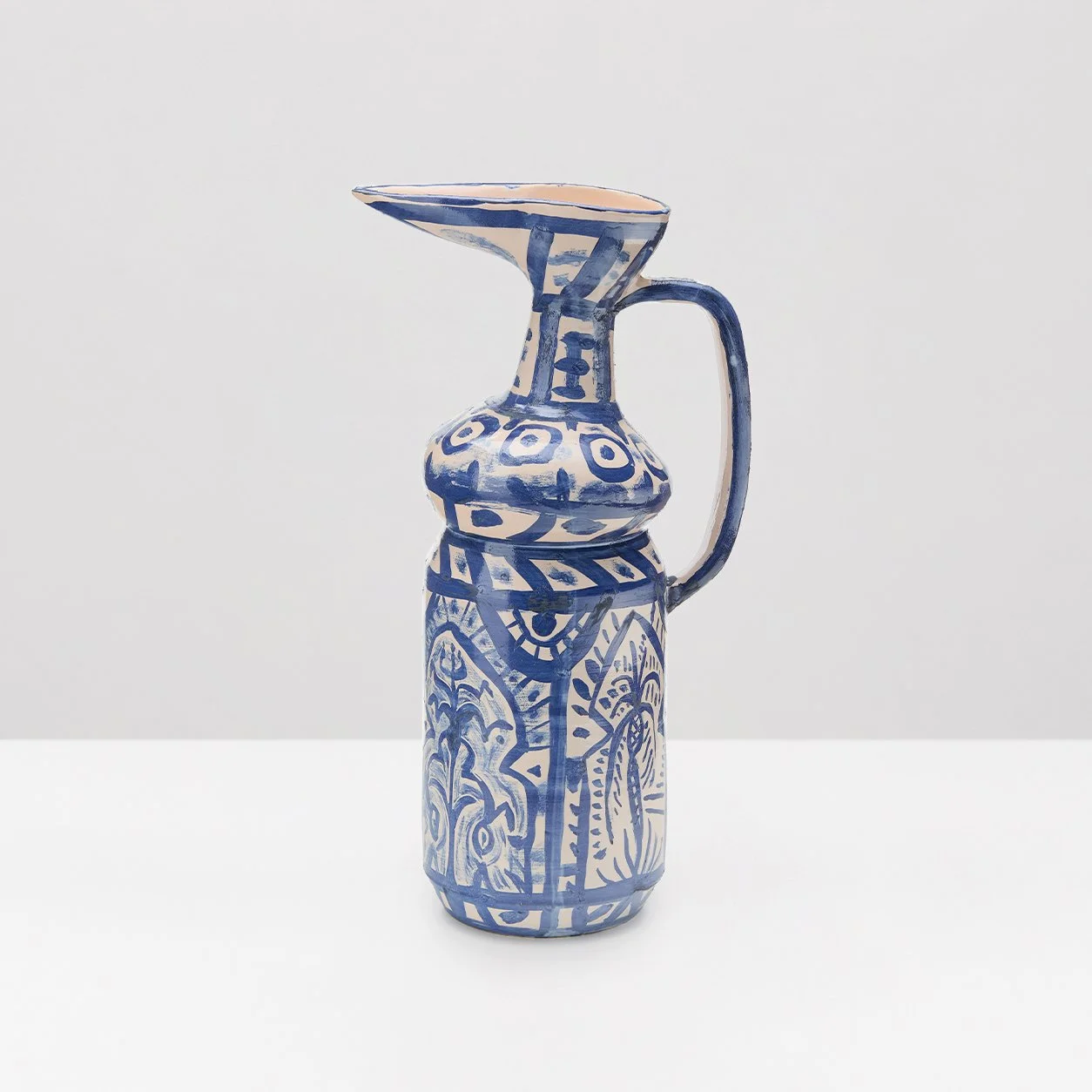
Granada Vase
2025
Cobalt-glazed ceramic
44 x 23 x 15 cm -
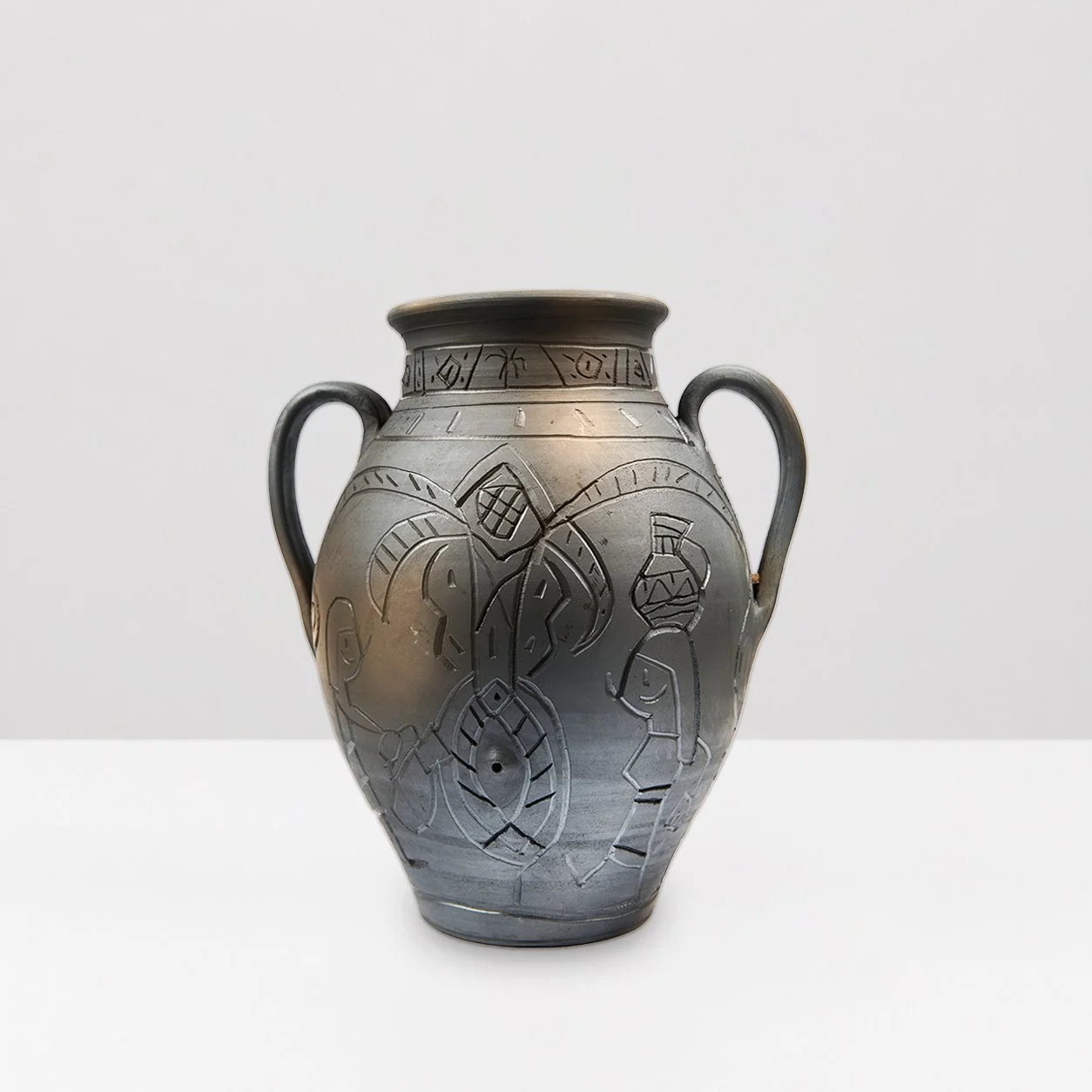
Botía Mantequera
2025
Black Ceramics from Avilés
30 x 20 x 20 cm -
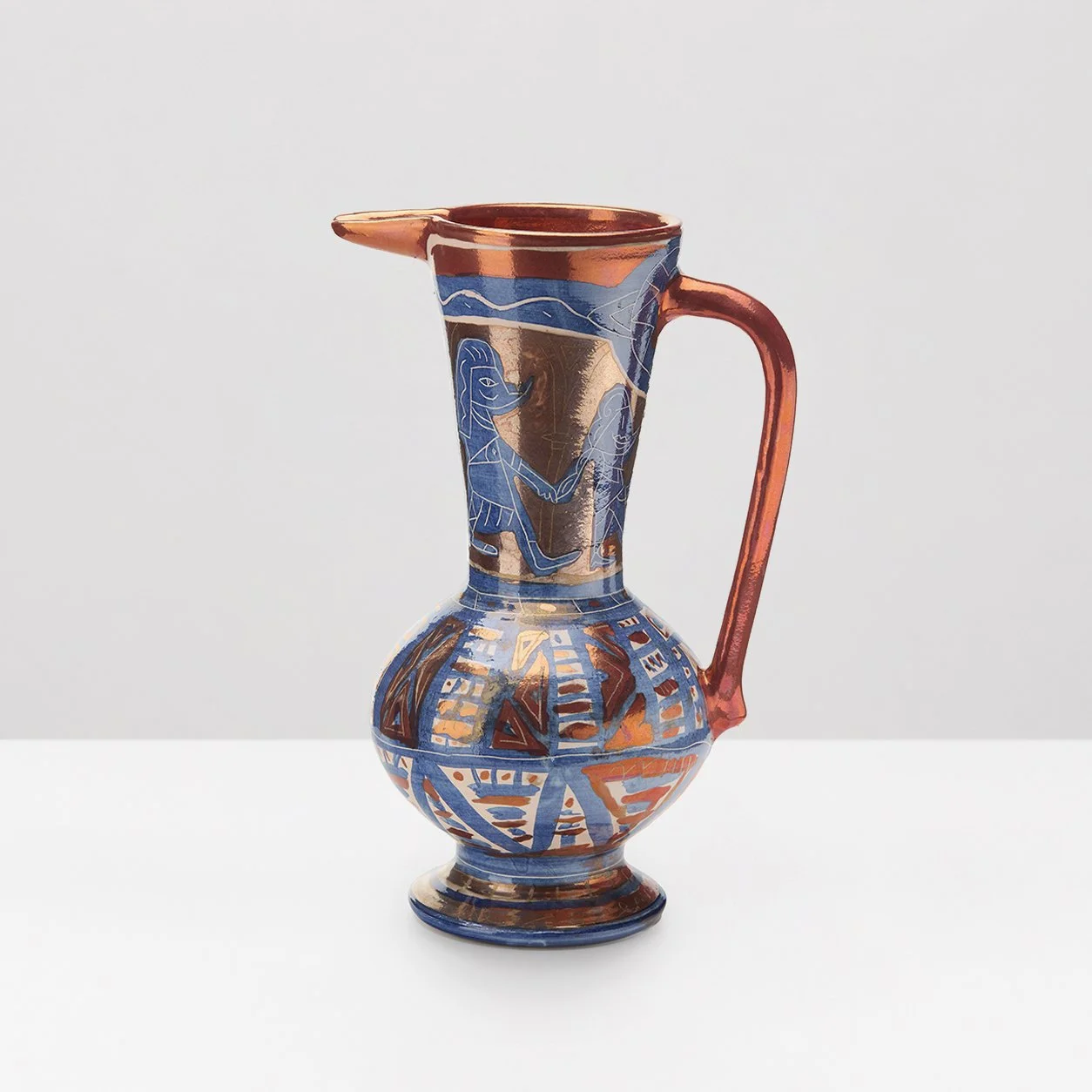
Abdula Fermina Jambalaya
2024
Metallic Reflection
40 x 25 x 17 cm -
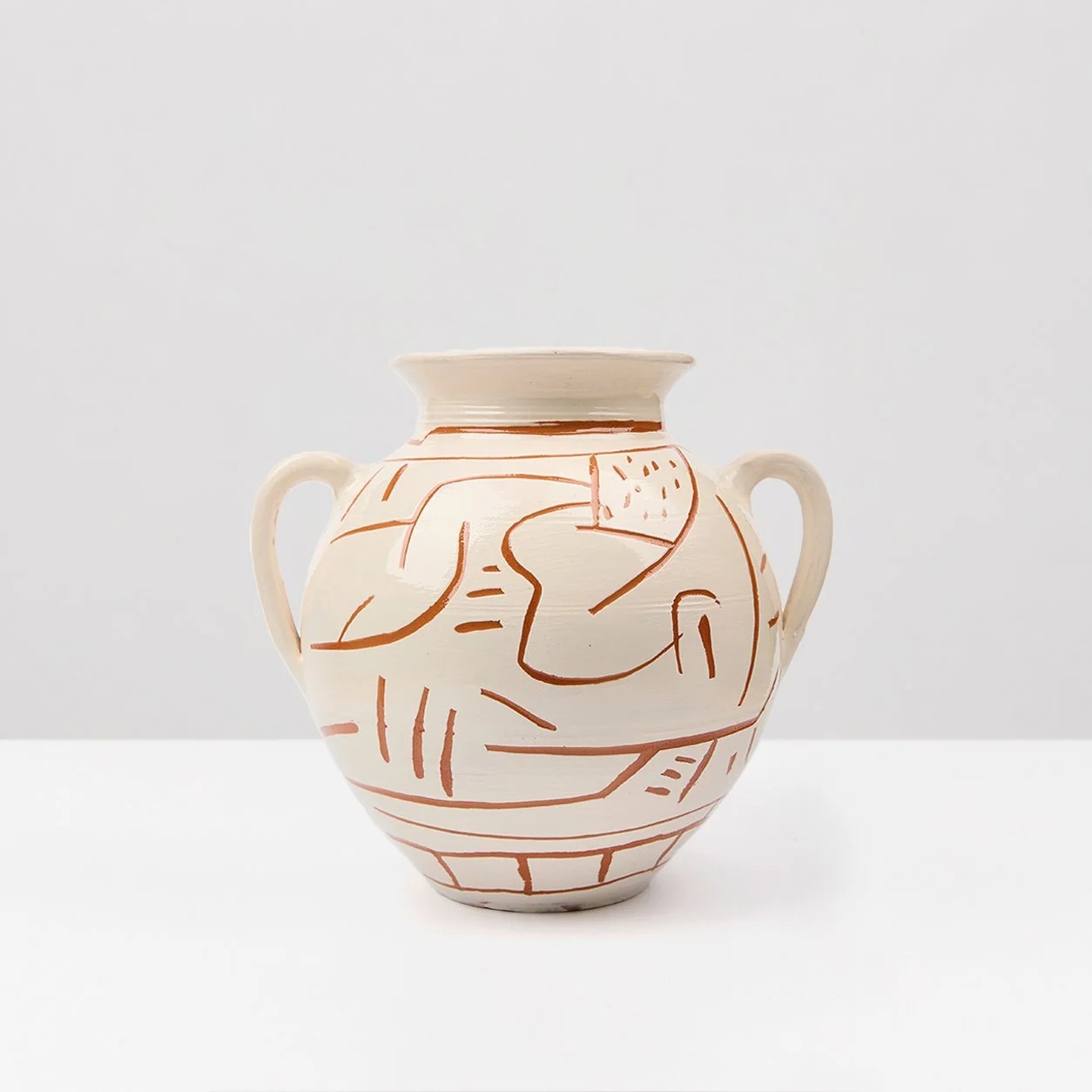
Winter Jug
2025
Black Ceramics from Avilés
25 x 20 x 20 cm
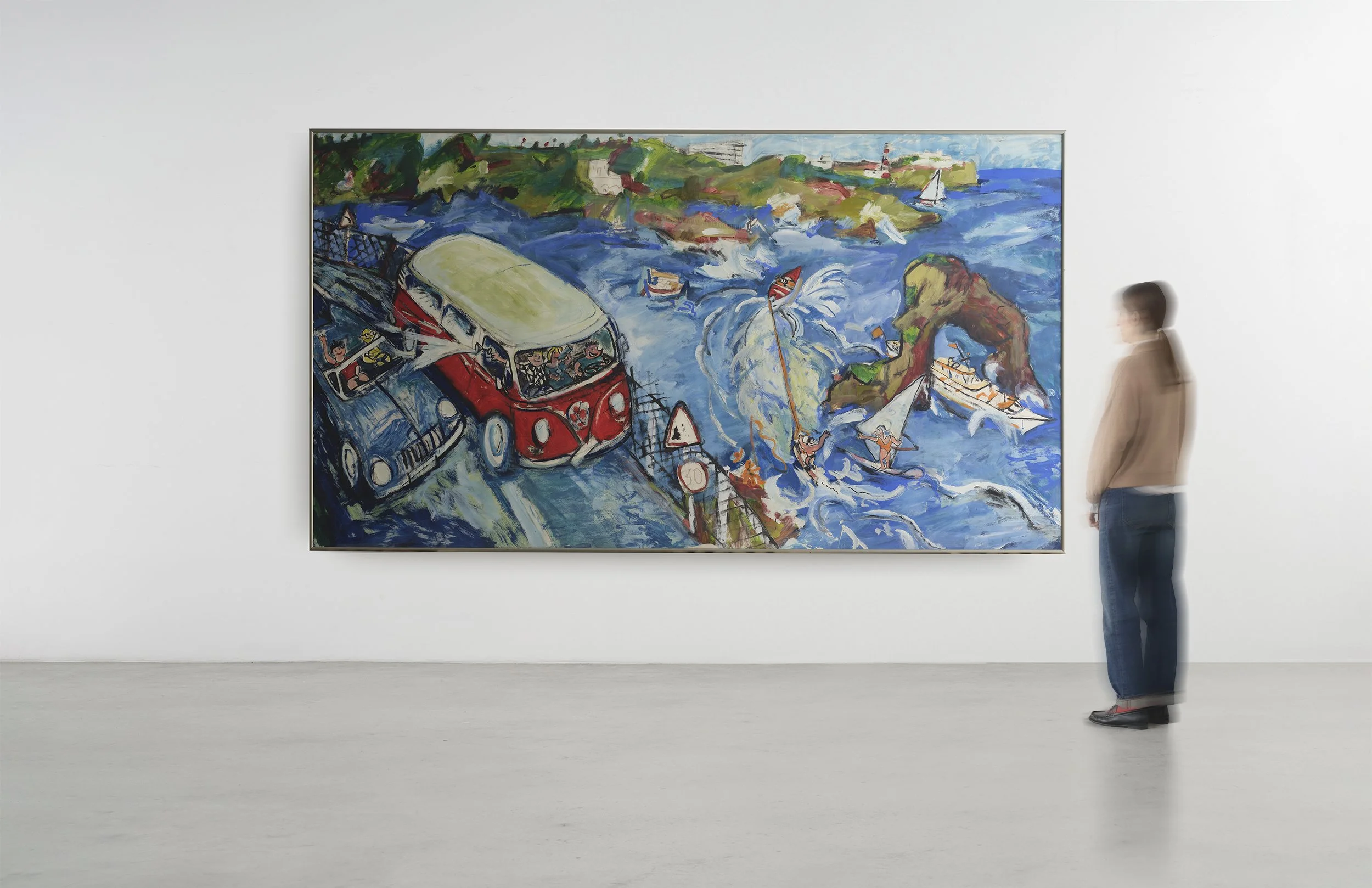
Garriri World
“The Garriris were born in the late 1960s. I was about eighteen years old and drew and drew, as always, compulsively. I loved filling blank pages with ballpoint pen, pencil, or pen and ink, watercolors, or colored markers. They came about suddenly, almost without my realizing it. I would start drawing, and I did it in two ways. I called the first one ‘Taking Notes’; I’d sit at the kitchen table or in front of any object and draw it. They were drawings of what Reality looked like. The balconies, my sister’s nose, my slippers, the fridge, and the blender.” J. Mariscal
A selection of rarely exhibited works featuring the characters from *Los Garriris*. These pieces depict scenes that capture the essence of the Garriri personality, combined with colors not typically associated with these characters, who were born from the pen and the underground comic.
“A few lines and dots came together, and a new character began to emerge from the pages. They’d look at you and immediately ask you to take them to other places; they wanted to travel, they were curious and full of energy. When I draw the Garriris, I always feel like they’re the ones calling the shots. At first they were tiny and very funny; they moved around a lot, and you could find them anywhere. Little by little, they grew bigger; they discovered the beach. The beach and the sea and the moon—the full moon. The pine trees, the boats, the sand, the waves, and the dunes.” J. Mariscal
The paintings stand out for their lines, which shift between the borders of a frame, a fishing rod, or a gigantic wave.
-
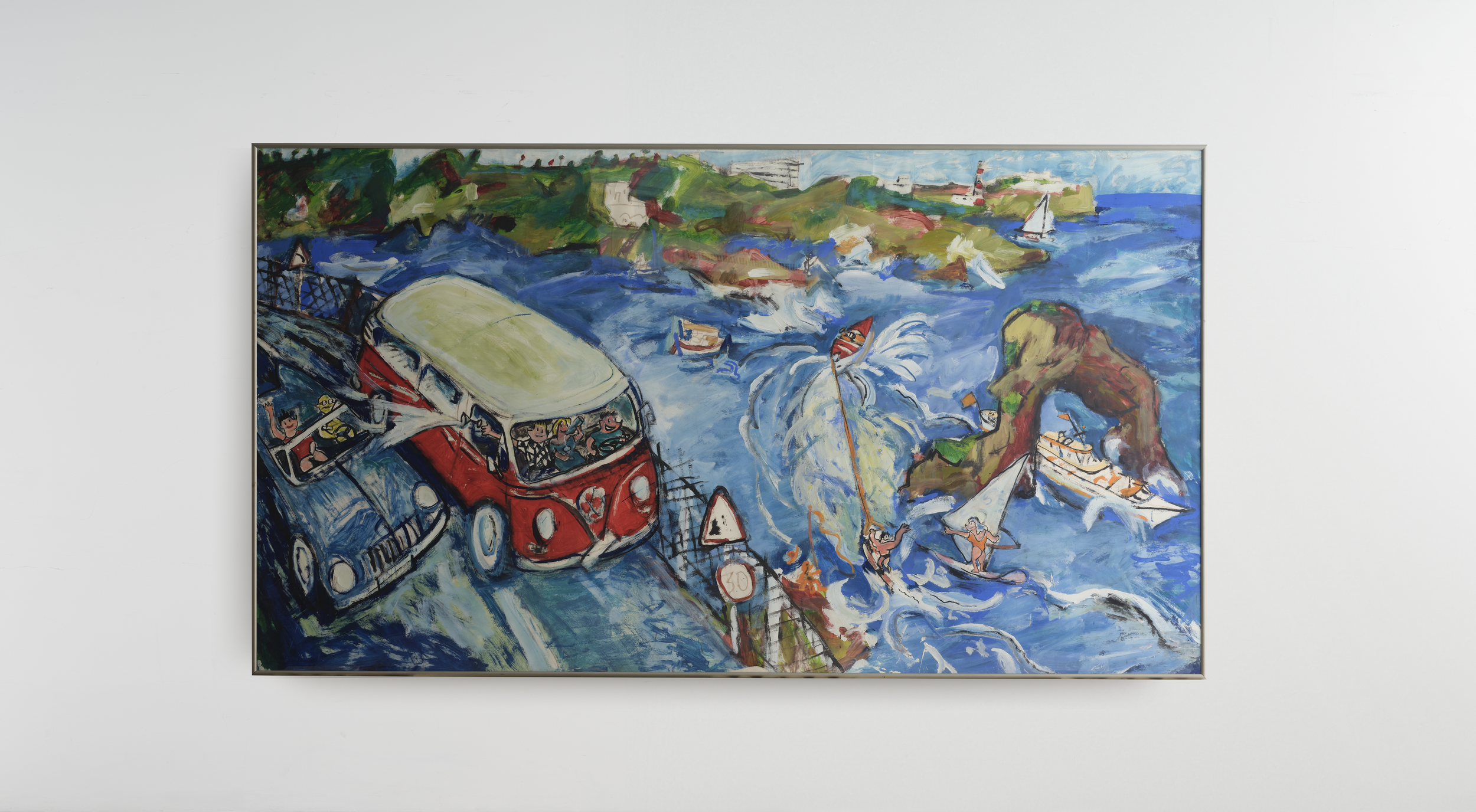
A confident girl
1984
Acrylic on wood
130 × 250 cm -
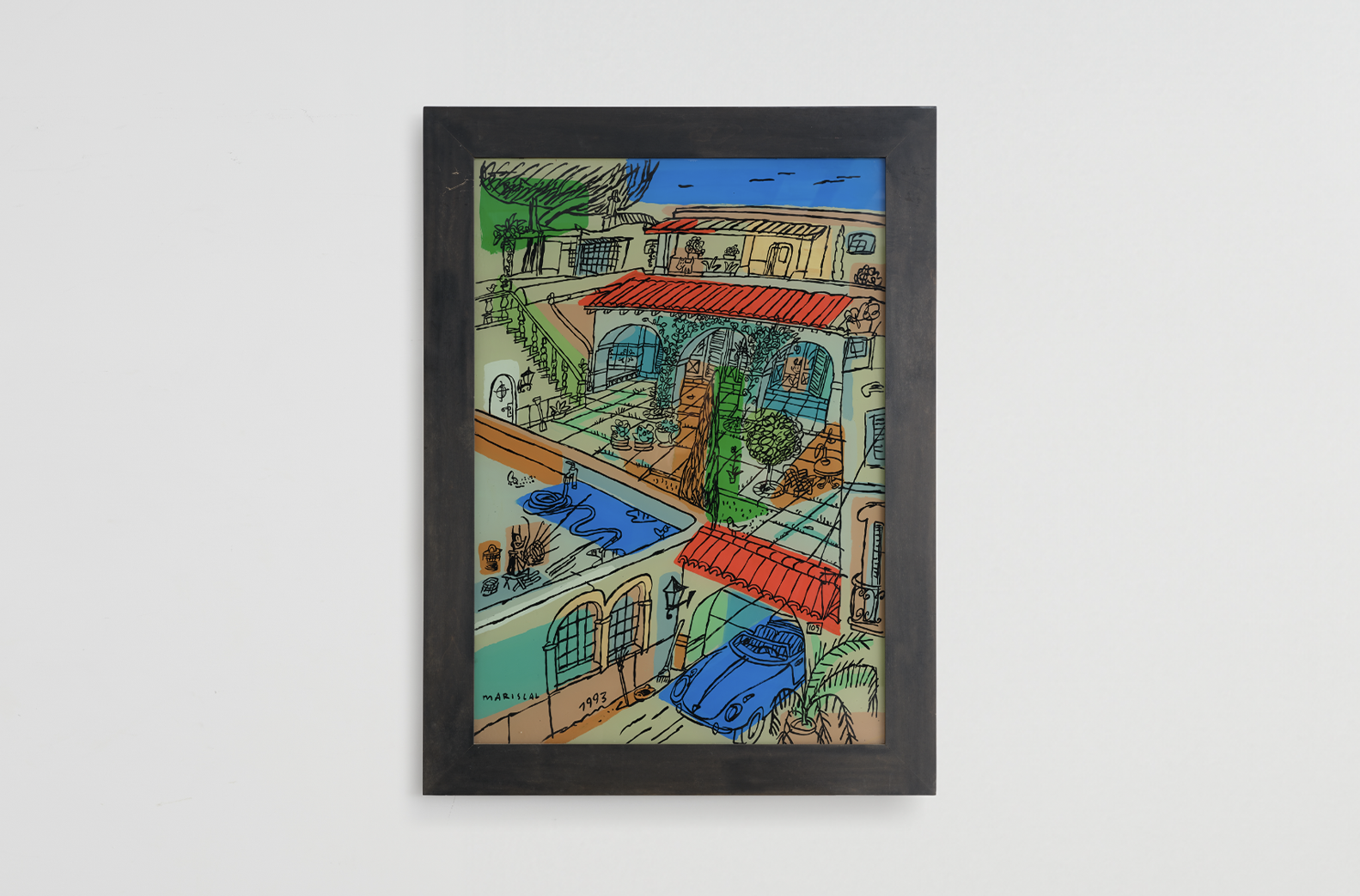
Canastero Roma
1993
Titanlux on glass
100 × 70 cm -
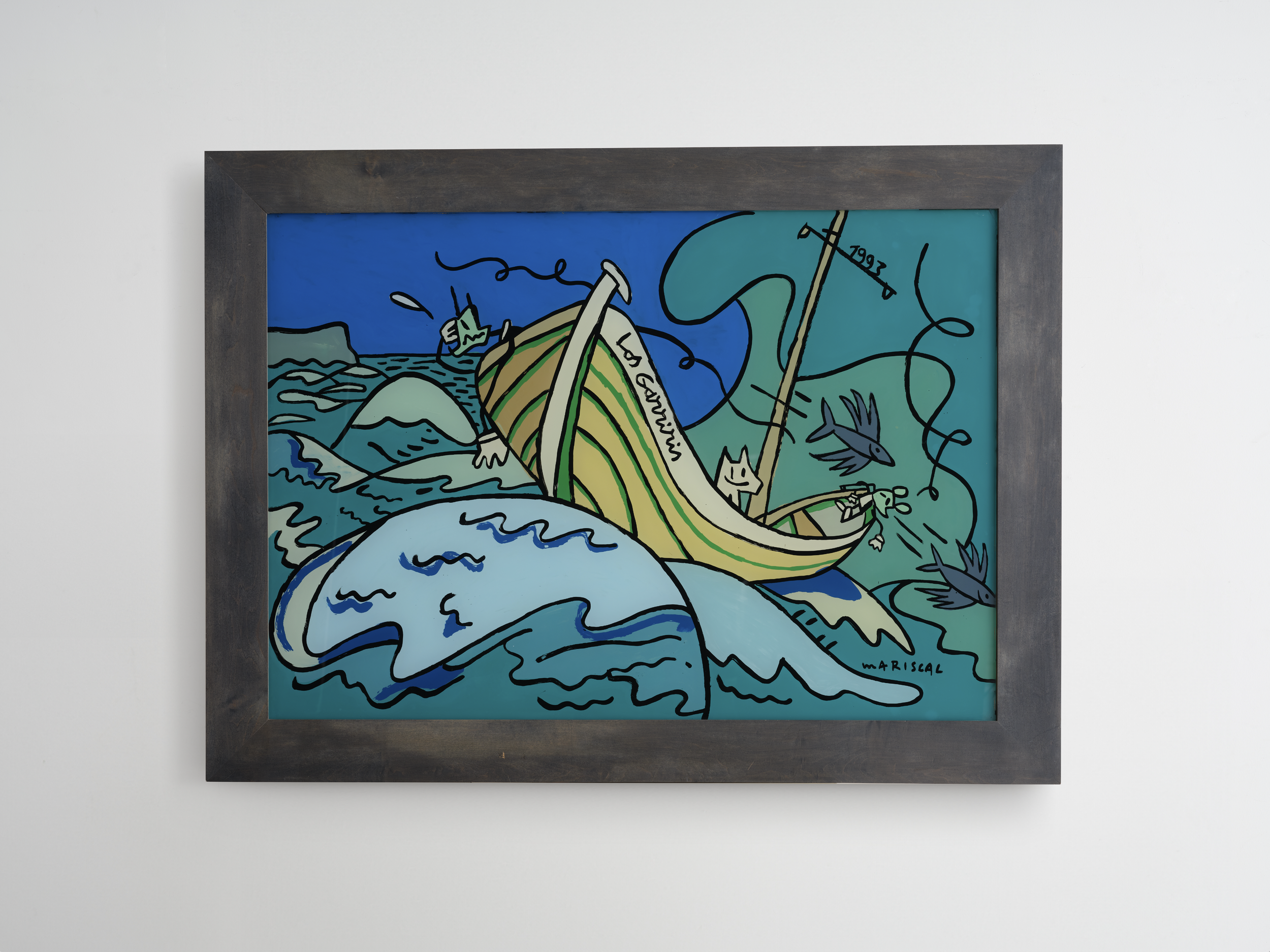
Flying fish
1993
Titanlux on glass
70 × 100 cm -
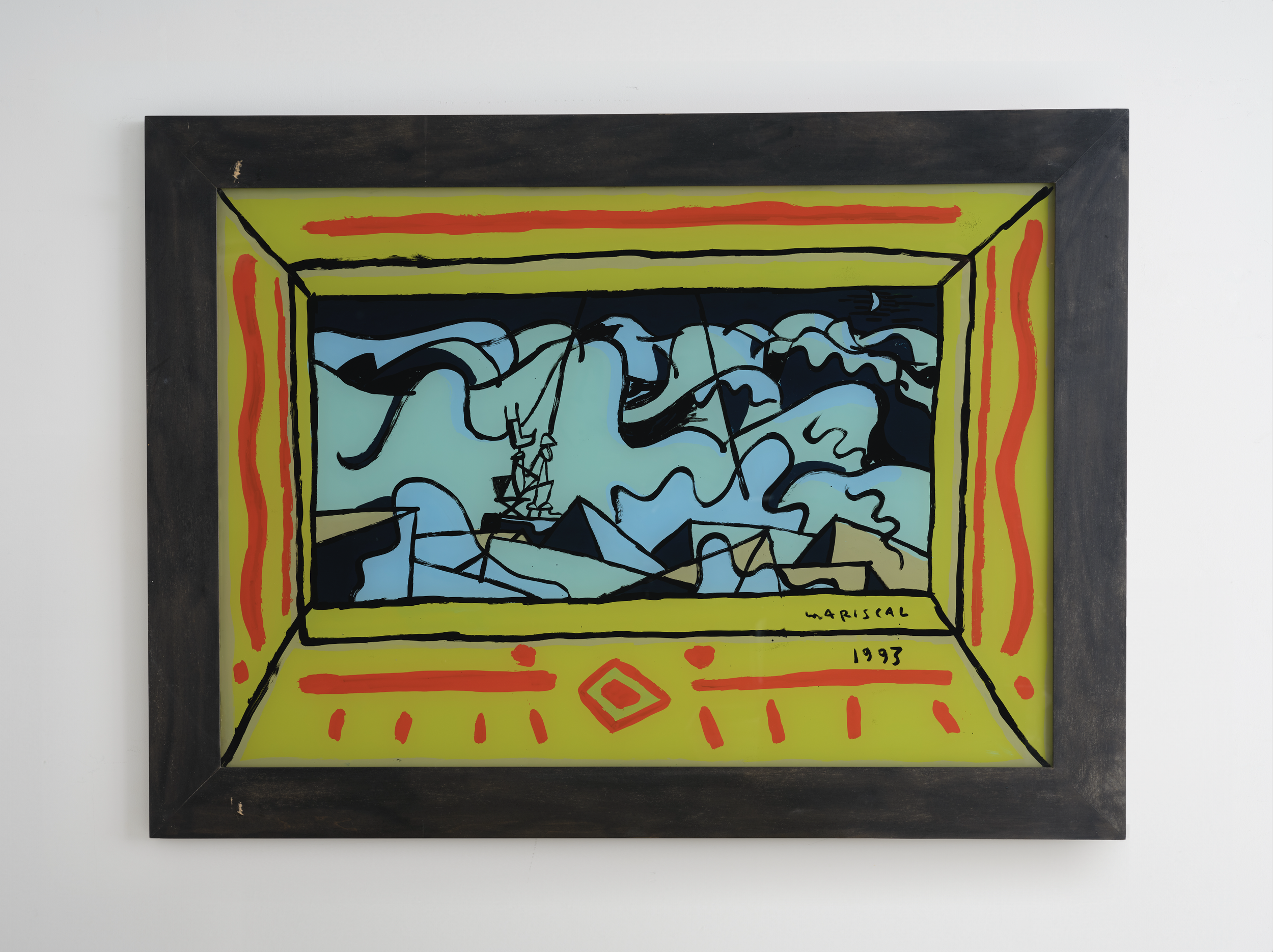
To the breakwater in rough seas
1993
Titanlux on glass
70 × 100 cm -
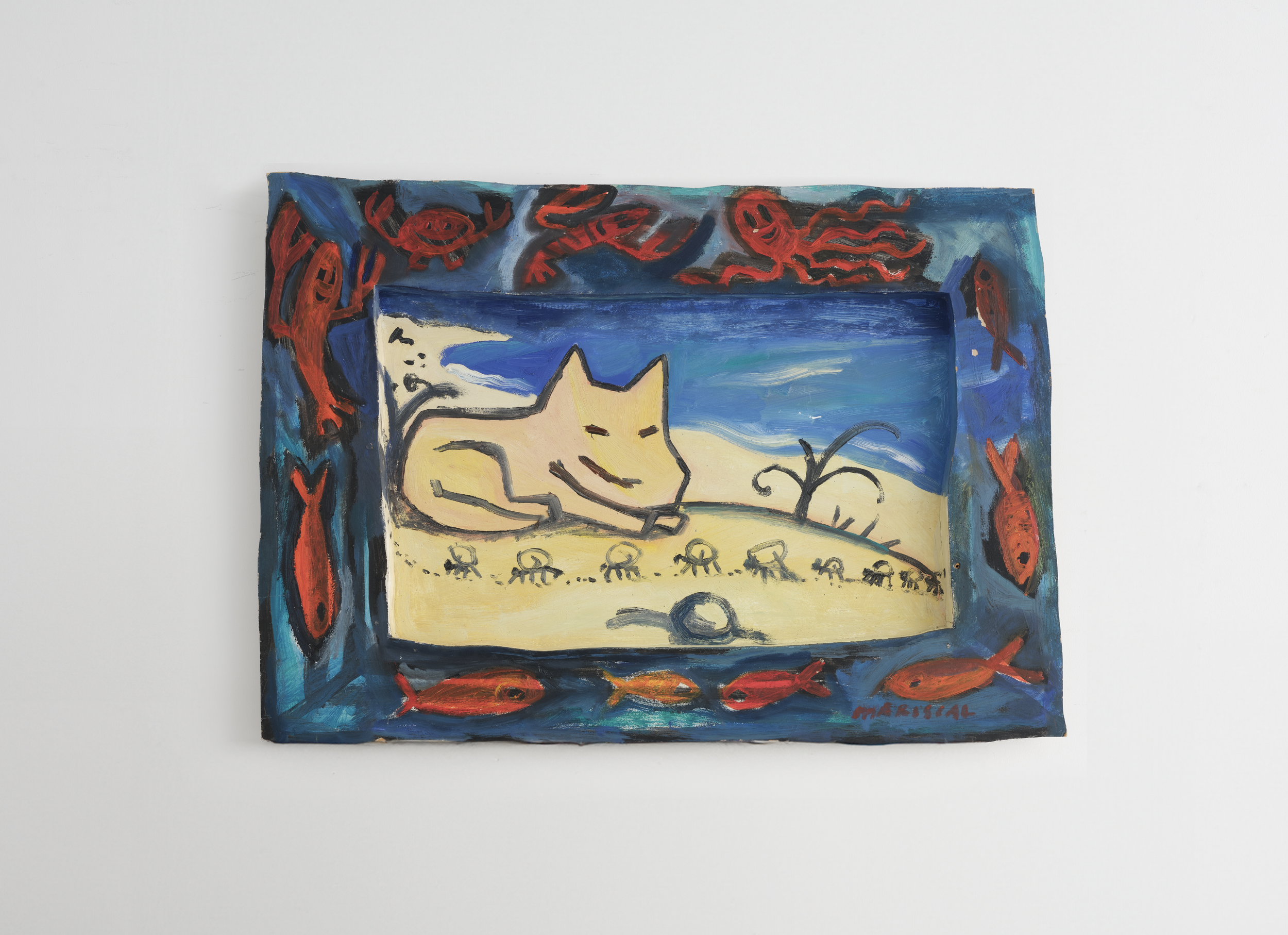
Julián dreams of ants
1994 *
* Oil on wood
59 × 83 cm -
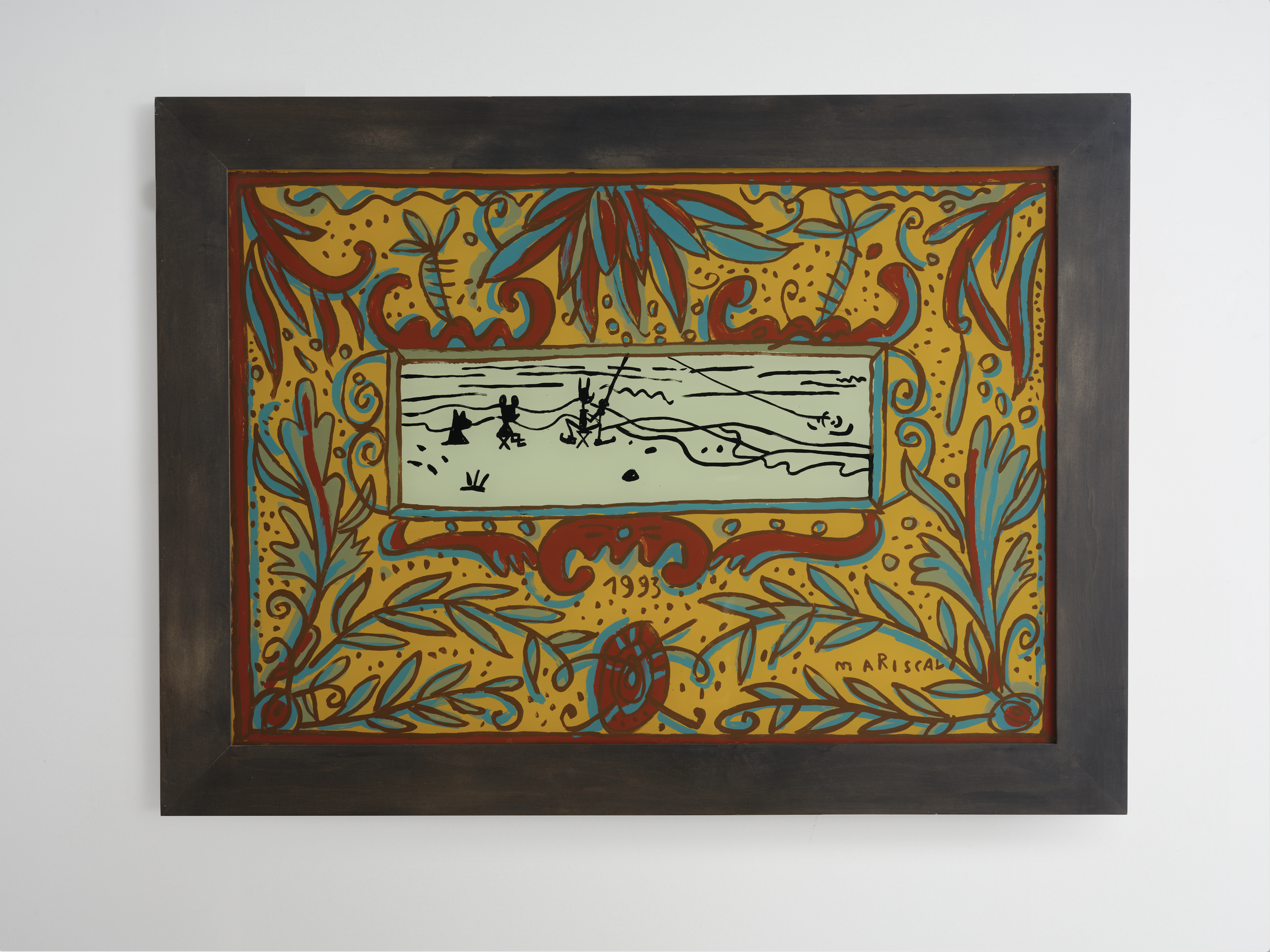
Fishing at Sea with a Frame
1993
Titanlux on glass
70 × 100 cm
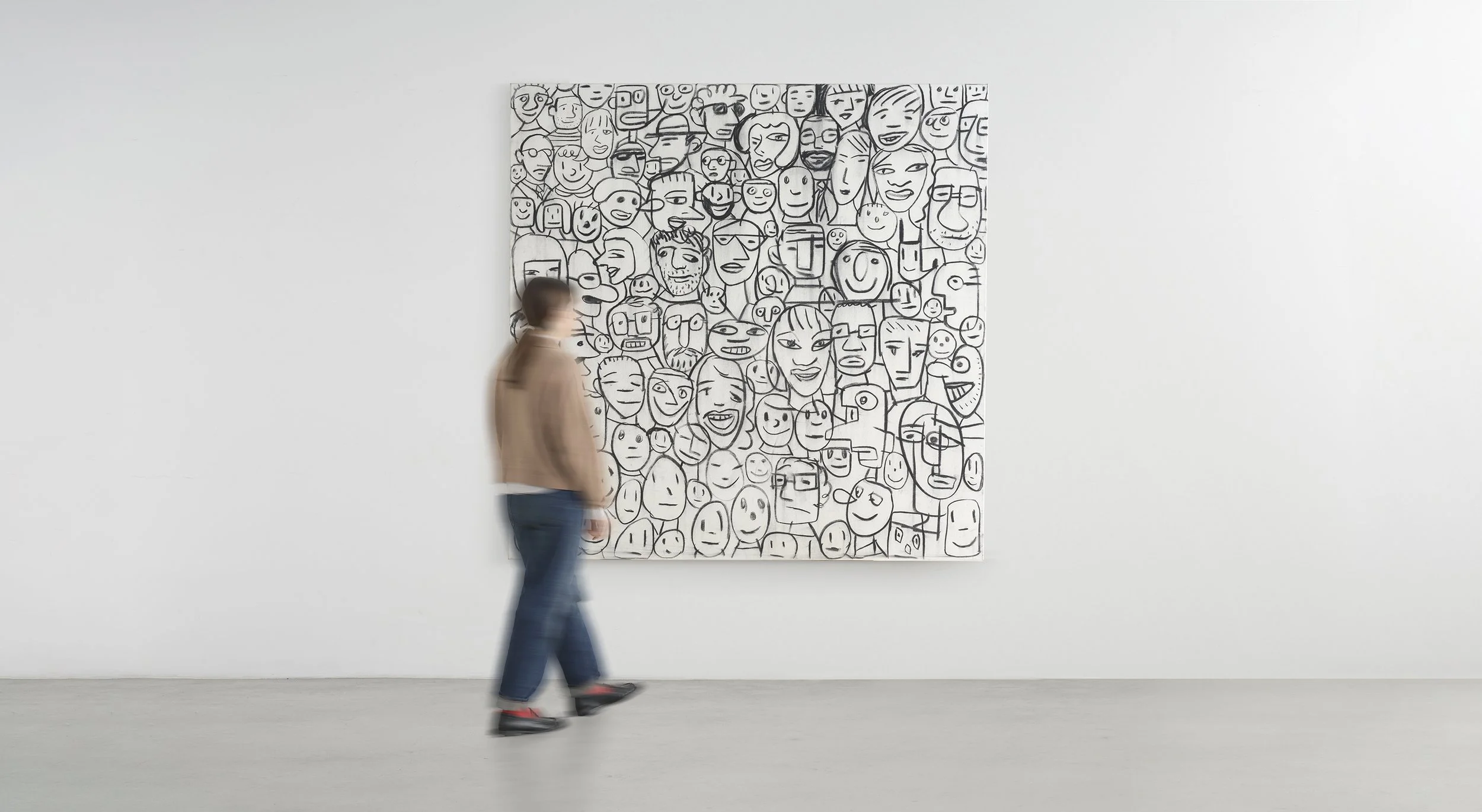
A Thousand Faces
Using a graphic style, Mariscal repeatedly draws faces that overlap, multiply, and differ from one another, oscillating between the multiple and the singular.
This series of paintings on canvas, created with charcoal or acrylic, primarily uses black and white as a language of immediacy. Those who wish to capture a gesture or a feature quickly sketch the moment. With a schematic stroke, they convey a thousand expressions. The subjects portrayed sometimes play the role of both actor and model for the artist, suggesting expressive movements that are depicted within a single work as if it were a sequence, reminiscent of the processes of animation. A medium in which Mariscal has worked on several occasions and with which he engages in dialogue in this series, introducing into painting processes he uses in other formats.
-
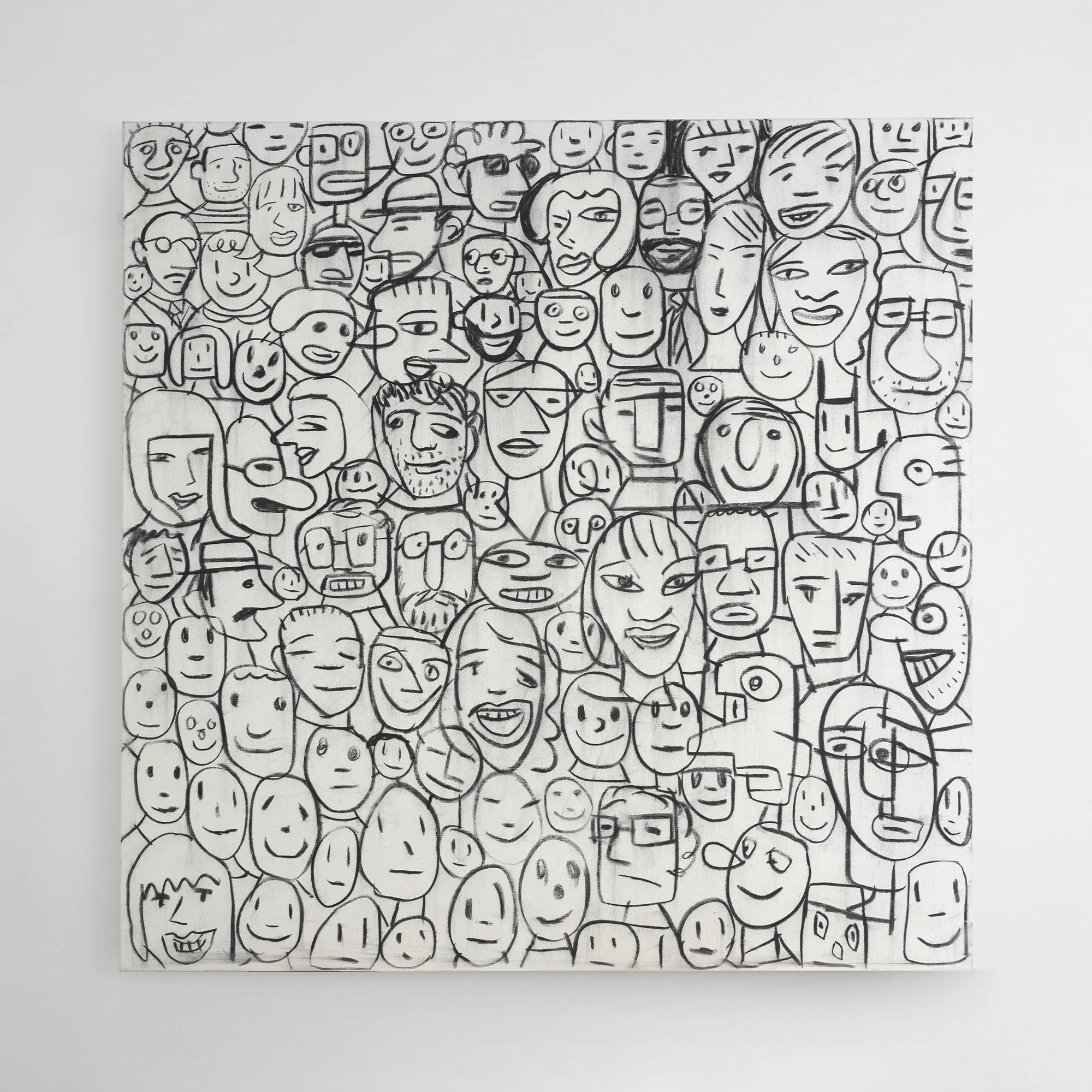
Many Faces Together 01
2006
Charcoal on canvas
190 × 190 cm -
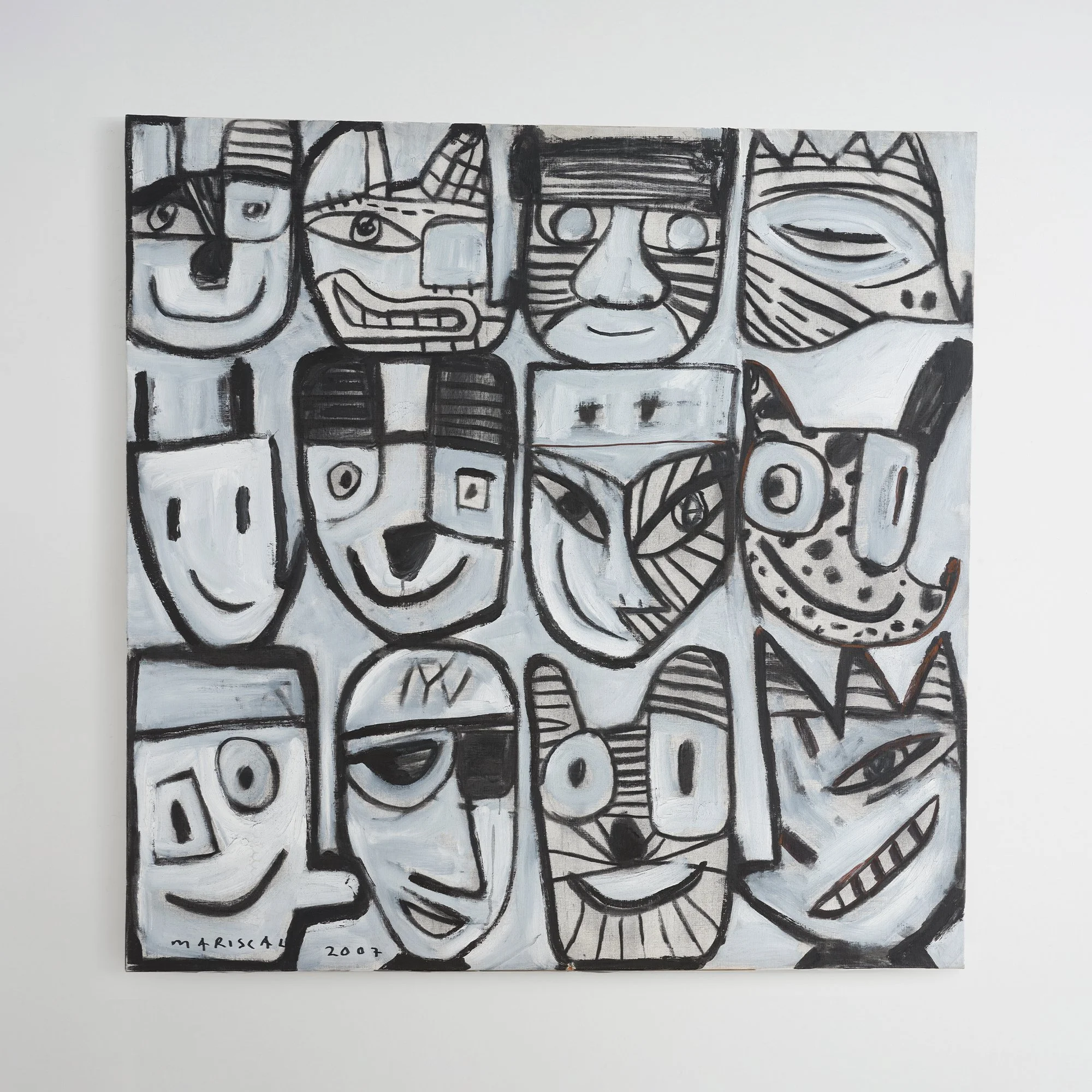
Twelve Faces of Garriris
2007
, mixed media on canvas,
, 120 × 120 cm -
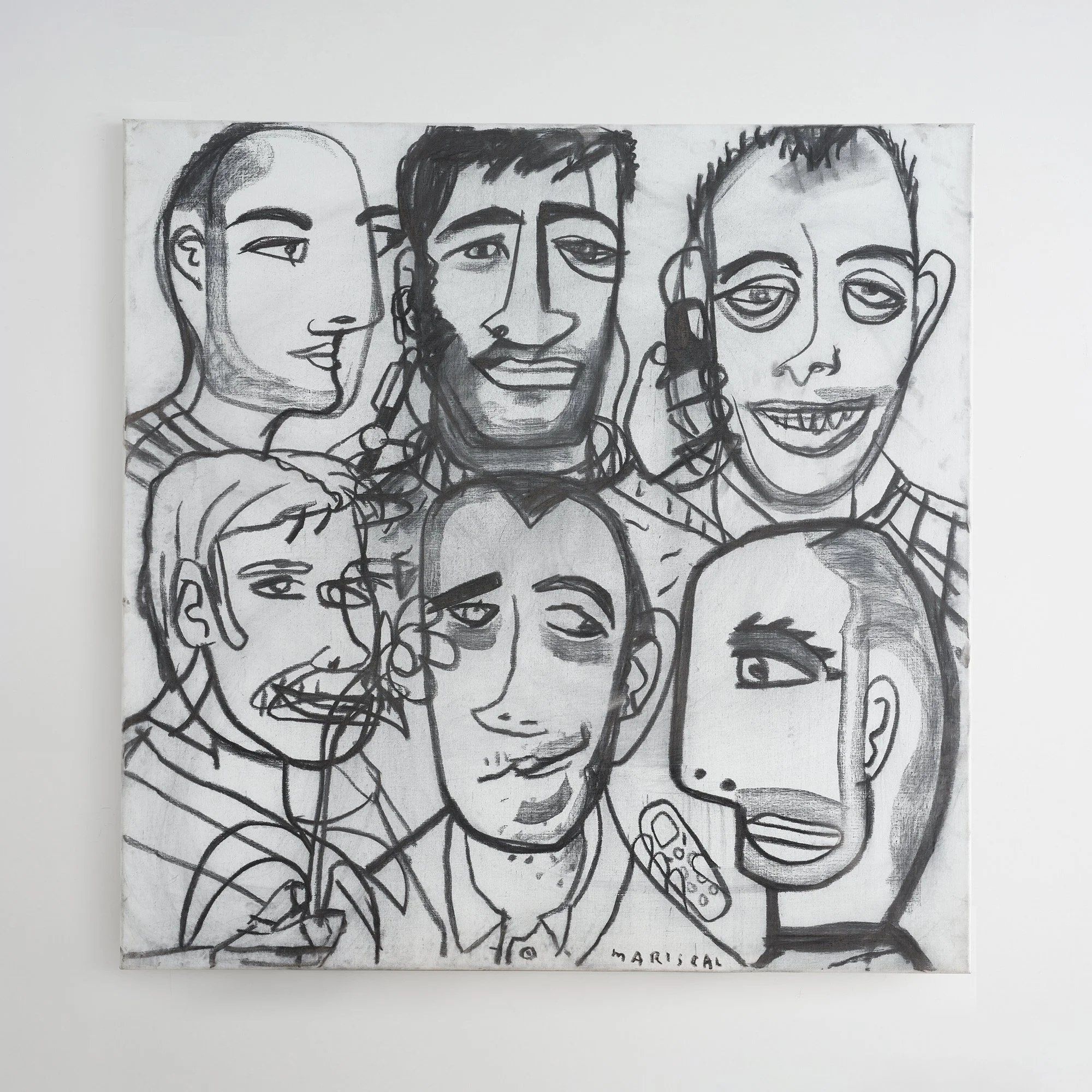
Federico, Ricard, Naval, Poli, Alex, and Max
2007
Charcoal on canvas
120 × 120 cm -
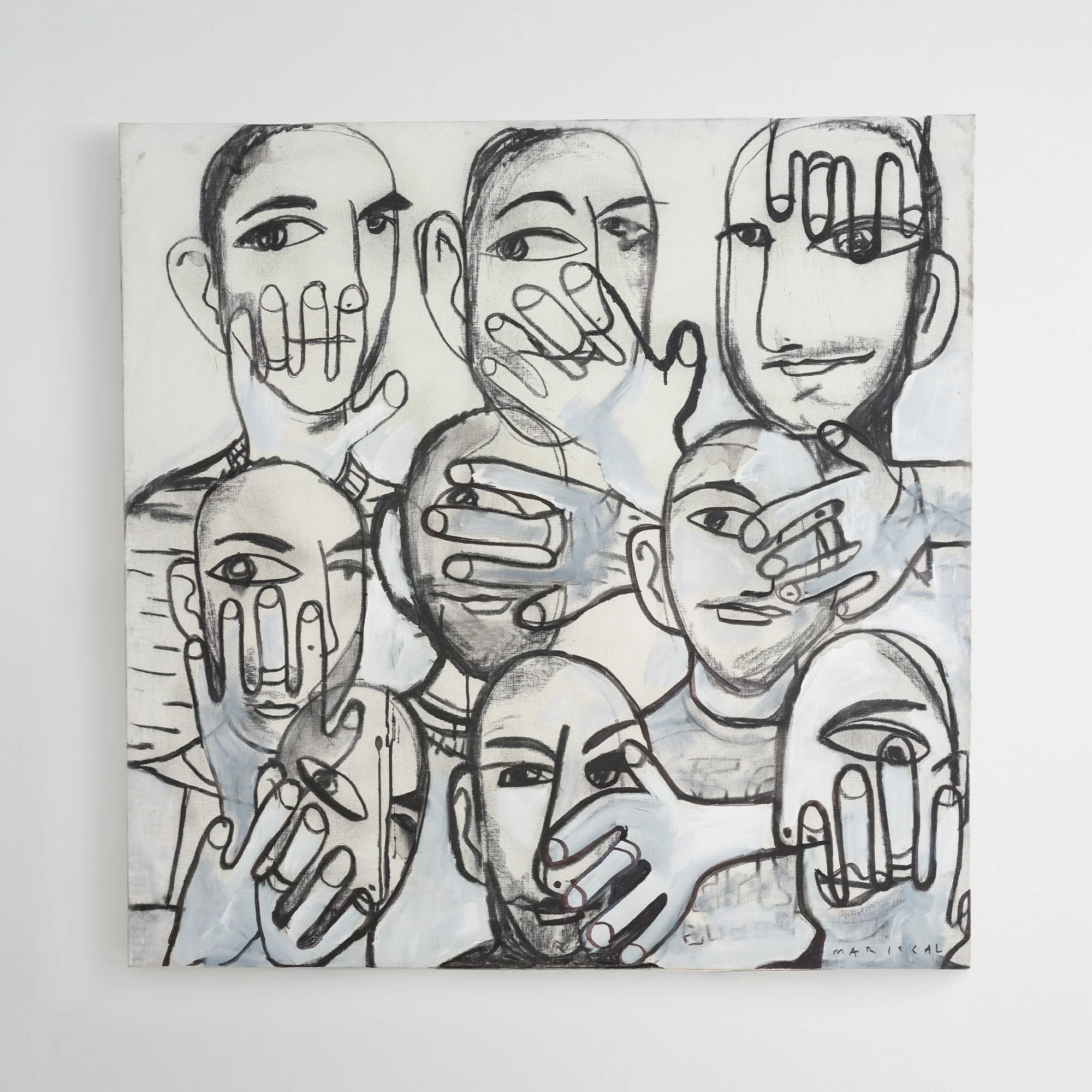
Federico Nueve
2007
, mixed media on canvas,
, 120 × 120 cm -
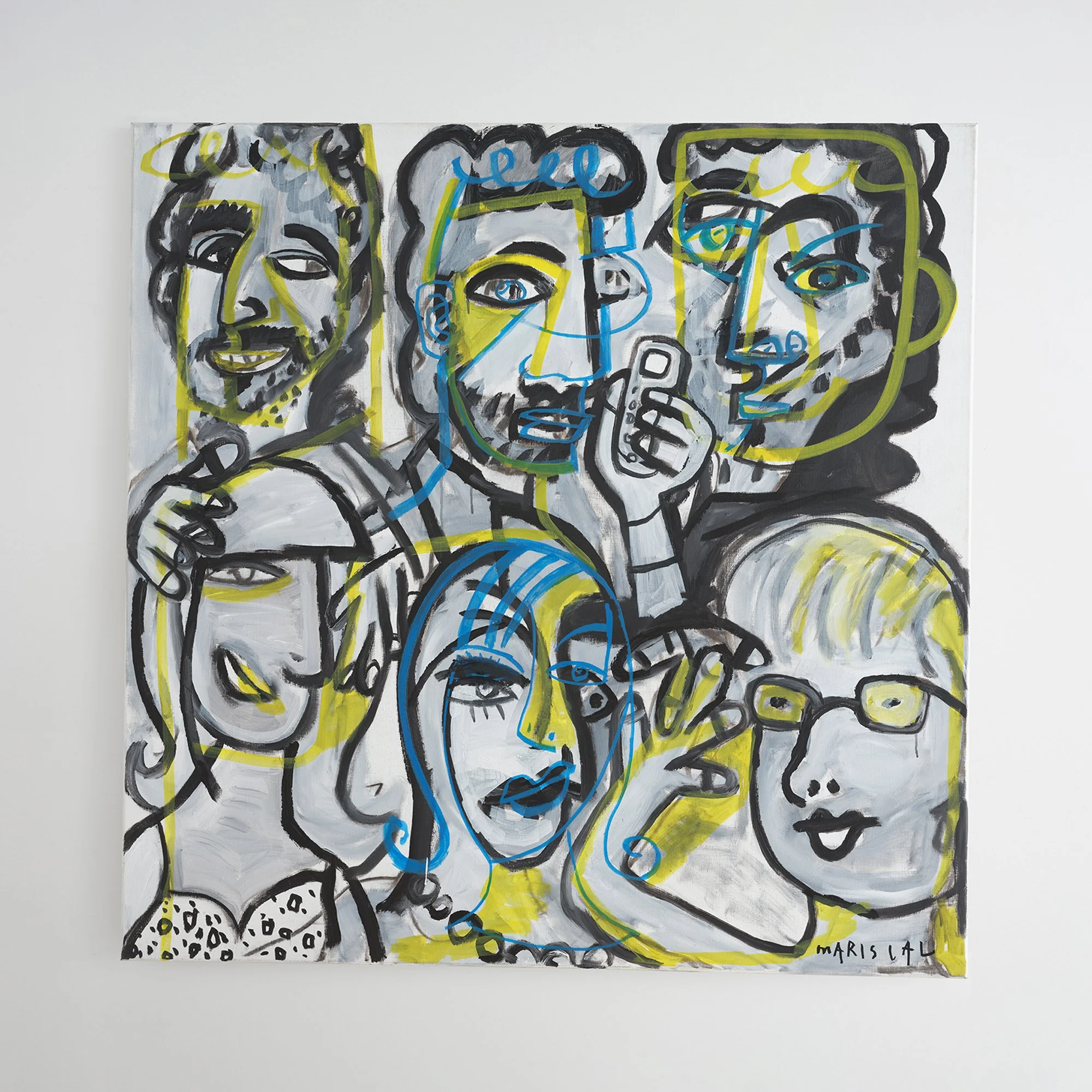
Six people with cell phones
2007
, mixed media on canvas,
, 120 × 120 cm -
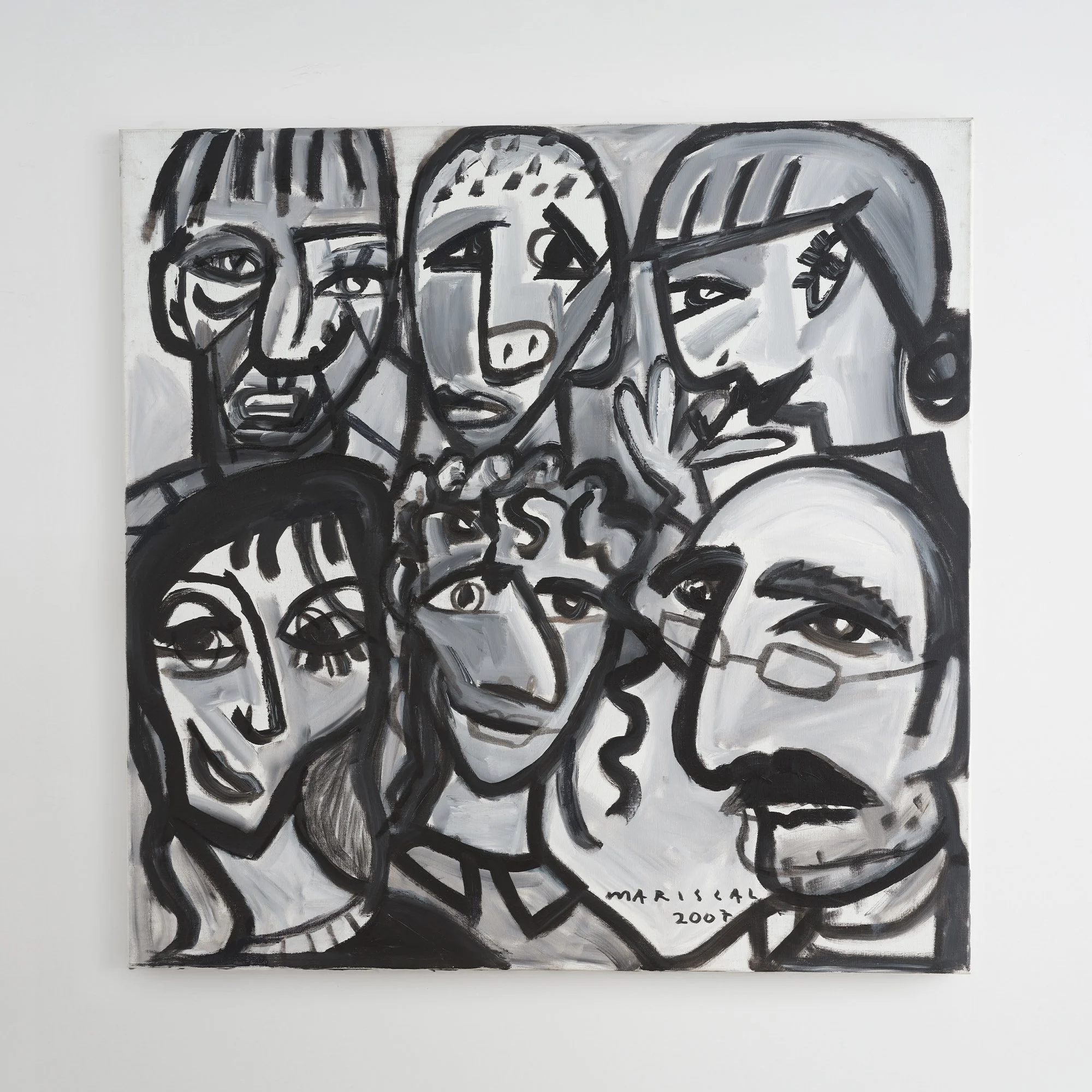
Various with Pedrín and Fernando
2007
Charcoal on canvas
120 × 120 cm